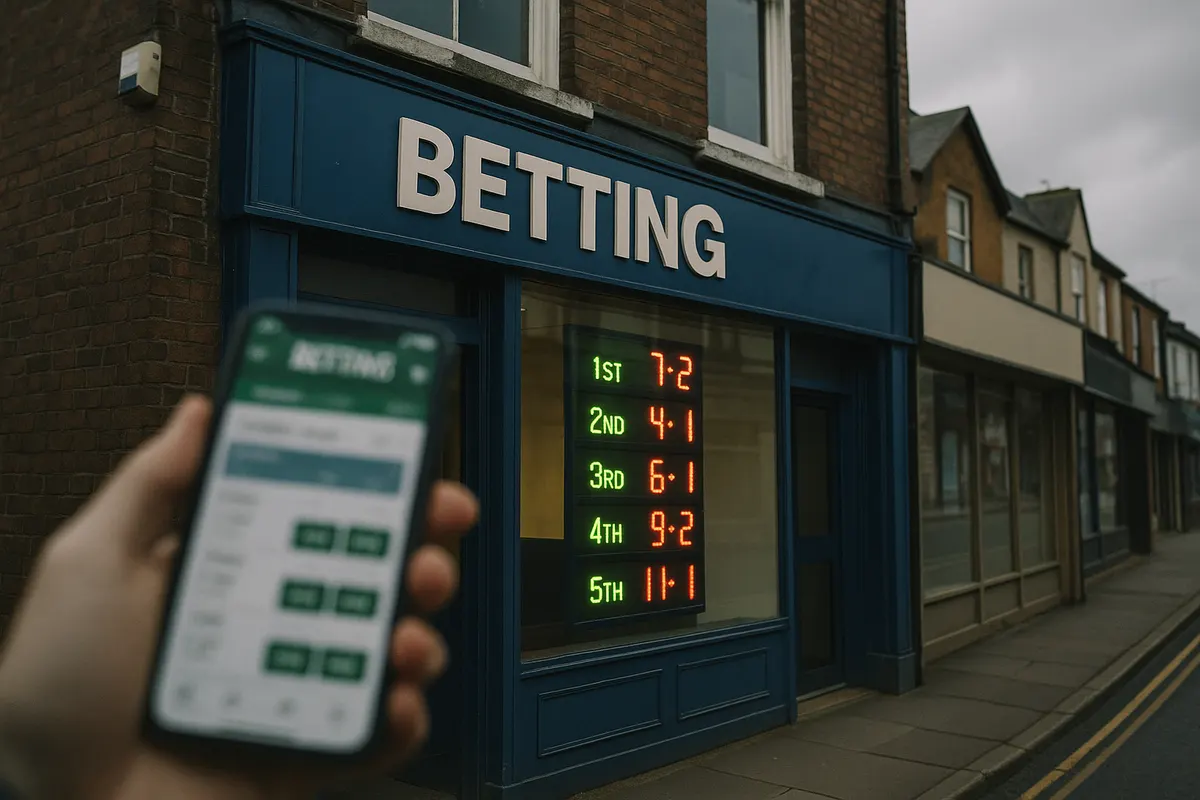
Up to 16,000 jobs, nearly 1,500 betting shops and as many as 34 casinos at risk, and the Treasury ending up £124m worse off rather than better. Those are the figures the Betting and Gaming Council put at the front of its Back Our Betting Shops campaign, drawn from EY analysis commissioned by the industry, modelling what would happen if Machine Games Duty rose to 40 per cent.
Whether you take those numbers at face value or treat them as lobbying arithmetic, the campaign is a useful window into something bigger: the slow, awkward rebalancing of British gambling from the high street to the phone. Below, I’ve pulled apart the assumptions people bring to that story, because most of them are only half right.
What the ‘Back Our Betting Shops’ campaign actually is
Back Our Betting Shops is a lobbying campaign from the Betting and Gaming Council (BGC), the trade body that represents most licensed British betting shops, online operators, casinos and bingo halls. Its immediate target is narrow: a proposed increase in Machine Games Duty, the tax operators pay on net takings from gaming machines (stakes in, minus prizes paid out). The BGC is arguing against a rise to 40 per cent.
What’s notable is the framing. Rather than lead with operator margins, the campaign is built around employees, customers and communities, the shop manager, the regular who comes in for the 2.10 at Wolverhampton, the sponsorship money flowing into greyhound racing and football. The EY modelling does the heavy lifting on the economics, including the claim that a duty rise would shrink rather than grow tax receipts because closures would wipe out the base being taxed.
The timing matters too. It lands while the Treasury is weighing changes to gambling duties, and while online-versus-retail tax parity is an open question in Westminster. Critics of the campaign make a fair point in return: betting shop closures over the past decade have been driven mostly by the migration of customers online, not by any single tax line. Both things can be true at once, which is where it gets interesting.
Myth: betting shops are closing because of regulation alone
Regulation accelerated the decline. It didn’t cause it.
Market share evolution
The structural shift predates any recent tax debate. Remote gambling, meaning online and mobile, is now the largest part of the British market by gross gambling yield, according to Gambling Commission industry statistics, while the licensed betting office estate has shrunk steadily. Smartphones, in-play markets, cash-out buttons and instant account funding did more to empty shops than any policy document.
The sharpest single regulatory jolt was the cut to maximum stakes on fixed odds betting terminals, from £100 to £2 per spin, which took effect in April 2019. FOBTs had become the profit engine of the modern shop, and the estate had effectively been built around them, four machines per premises, which is part of why so many towns ended up with several shops on one street. Once that revenue collapsed, the major chains announced hundreds of closures within months. The machines didn’t kill retail betting; the dependency on them exposed how thin the rest of the model had become.
Customer experience differences
Retail and online are not the same product at different speeds. They serve genuinely different appetites, and the economics of each follow from that.
| Dimension | High street betting shop | Online operator |
|---|---|---|
| Cost base | Rent, business rates, staff, security, licensing per premises | Technology, marketing, payments, compliance, scalable |
| Typical session | Short visits, cash stakes, racing and football coupons, machines | Any time, account funded, in-play betting, slots and live casino |
| Spend control | Physical cash limits spend; staff can see and intervene | Deposit and loss limits, time-outs, self-exclusion tools |
| Product range | Constrained by floor space and machine allowance | Effectively unlimited game and market catalogue |
| Social element | Face to face, familiar staff, shared screens | Solitary, sometimes with chat or community features |
Myth: the pressure on UK betting shops is mostly about gambling rules
Gambling rules are one of three squeezes, and arguably not the heaviest right now.
Regulatory pressures
Every licensed premises carries a compliance load: age verification at the door, staff training, local risk assessments, anti money laundering checks, and the licence conditions the Gambling Commission enforces. None of that scales the way it does for an online platform, where one compliance system covers millions of accounts. Machine allowances cap upside per shop, and the £2 stake limit removed the ceiling on machine revenue permanently.
Economic headwinds
This is the part often missed in gambling coverage. Betting shops are high street retail businesses, and they carry high street retail costs: rent reviews, business rates, energy bills, and the rising cost of employing people, including National Insurance and minimum wage changes. Footfall on secondary high streets has fallen for years. A shop that was marginal in 2018 does not survive a decade of that, tax debate or no tax debate.
Digital competition
Online operators compete for the same customer with a wider product set, bigger promotional budgets and a marginal cost per new bet close to zero. They also own the in-play moment, which is where a large share of football betting now sits. A shop can’t match that, so the shops that survive tend to be the ones in locations where walk-in trade, racing and cash betting still hold up.
The industry’s case for the high street
Set aside the lobbying tone and there are four arguments high street bookmakers make that stand up to scrutiny.
- Local employment. Shop jobs are distributed across towns and often accessible without a degree or specialist training. Online roles cluster in a handful of city offices and tech hubs, so a closure programme doesn’t transfer employment to the same places.
- Physical presence and spend controls. Cash is a blunt but effective limiter. You can only lose what you walked in with, and there is no 2am deposit at the counter.
- Human oversight. Trained staff can see distress that an algorithm infers from data, and retail multi-operator self-exclusion schemes let a customer bar themselves from every shop in an area at once. It isn’t a substitute for online tools, but it’s a different kind of safeguard.
- Customer preference. A real segment of bettors, skewing older, prefers to bet in cash, watch racing on a shop screen and talk to a person. That demand doesn’t vanish if the shop closes; it either stops or moves online, where the pace is faster.
The counter-argument deserves equal airtime. Machines in shops were restricted for a reason, clustering of premises in lower income areas has been a recurring criticism, and an industry body defending machine revenue while citing community value will always invite scepticism. Both positions can be argued in good faith.
Myth: this is retail versus online, winner takes all
It hasn’t been a straight fight for years. The same companies own both channels.
The big British operators run omnichannel businesses: an account you can fund at the counter and use on the app, shop screens that promote digital products, cash-out available in either place. When a chain closes shops, it doesn’t necessarily lose the customer, it re-routes them. That’s exactly why the tax debate is so pointed. If duties differ sharply by channel, the commercial logic of where to serve a customer changes, and estate decisions follow the tax code rather than local demand.
Three trends are worth watching. Consolidation continues, with the estate concentrating into fewer, better located shops rather than disappearing entirely. Shops are being repositioned around what they do uniquely well, live racing, cash betting, sport on screen, social atmosphere, rather than trying to out-catalogue an app. And regulators are increasingly treating affordability, marketing and product design as cross channel questions, which gradually narrows the rulebook gap between a terminal in a shop and a slot on a phone.
What this campaign really exposes is an industry arguing for a transition it can plan for, rather than a cliff edge. Whether the numbers are right is a matter for independent scrutiny of the EY modelling. The direction of travel isn’t in doubt: fewer shops, more digital, and a smaller retail core defending the ground it still holds.
Frequently asked questions
What is the Back Our Betting Shops campaign?
A lobbying campaign launched by the Betting and Gaming Council in the UK to oppose a proposed rise in Machine Games Duty to 40 per cent. It centres on shop employees, customers and communities, and cites EY analysis putting up to 16,000 jobs, nearly 1,500 shops and up to 34 casinos at risk, with £124m less revenue for the Treasury.
Why do betting shops matter?
The industry’s case rests on local employment spread across towns, face to face responsible gambling oversight, cash based spend limits, sponsorship of British racing and sport, and a customer segment that prefers betting in person. Critics counter that closures have been driven mainly by customers choosing online, and that machine revenue is a contested thing to defend.
How do betting shops compete with online operators?
Mostly by not competing head on. Shops lean on live racing, cash betting, screens and staff familiarity, while their parent companies run omnichannel accounts that link the counter to the app. They cannot match an online catalogue or in-play speed, so location quality and walk-in trade decide which shops survive.
What challenges face retail betting in the UK?
The £2 FOBT stake limit introduced in April 2019, per premises compliance costs, rent and business rates, rising employment costs, falling high street footfall, and online competition with far lower marginal costs. Proposed gaming machine tax increases sit on top of all of that.
Gambling should be treated as entertainment with a built in house edge, not a way to make money. If it stops being fun, deposit limits, time-outs and self-exclusion are available both online and in licensed shops, and free confidential support is available in the UK from GamCare and the National Gambling Helpline.