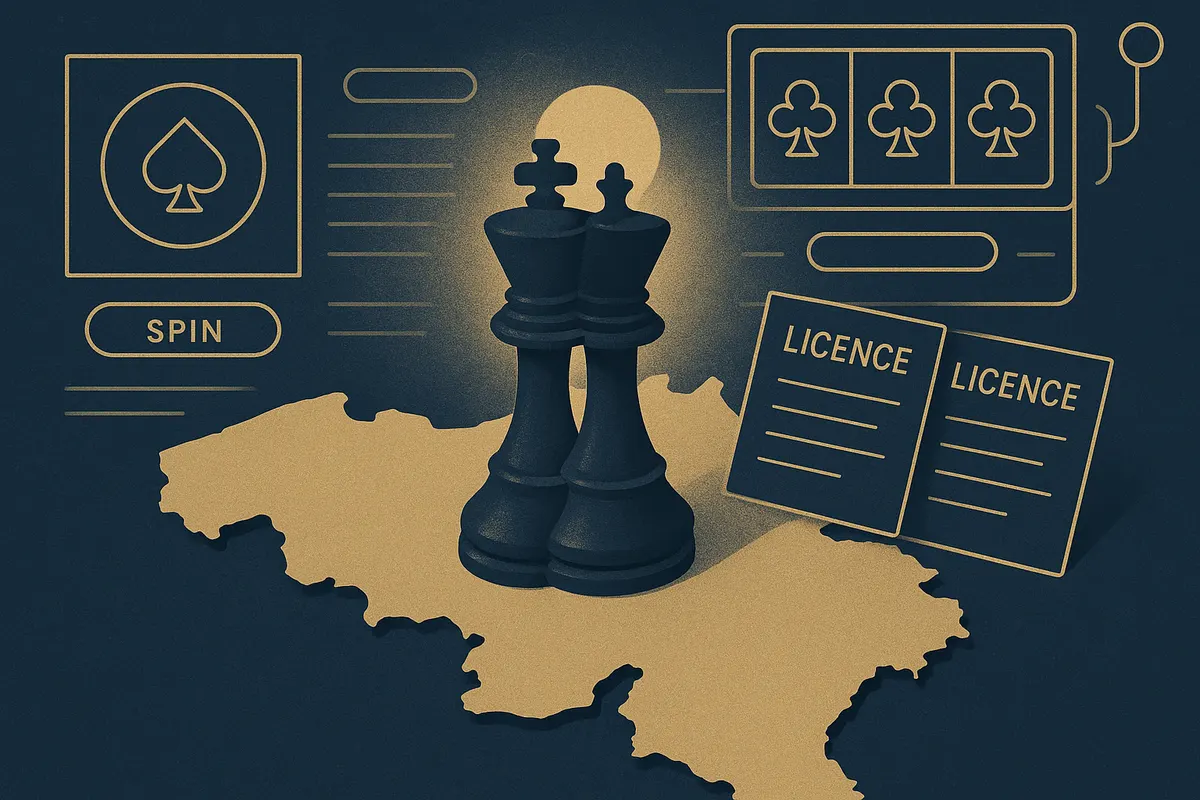
Belgium permits a maximum of nine land-based casinos, and an online casino licence there cannot exist on its own: it has to be attached to one of those physical venues. That one rule explains the Gaming1 Carousel Group acquisition better than any strategy deck. In a market where licences are capped by law, you don’t apply for market share. You buy the company that already holds it.
Gaming1, the Belgium-based operator and gaming technology group, agreed to acquire Pac-Man NV, the parent company of Carousel Group, taking control of its Belgian licence and its digital operations. For players, deals like this are usually invisible until the day the lobby looks different. This piece uses the deal as a worked example of how casino consolidation actually functions, and what it does to game selection, platform reliability and support.
Gaming1 acquires Carousel Group: the deal breakdown
What changed hands is a company, not a product. Gaming1 agreed to buy Pac-Man NV, Carousel Group’s parent entity, which brings with it the Belgian licence and the associated online operations. The two businesses already had a working relationship before the deal, so this is less a hostile land grab than a partner being absorbed, which is the most common shape consolidation takes in regulated igaming.
The structure matters more than most headlines suggest. Buying a parent company (a share purchase) transfers the legal entity intact: the licence, supplier contracts, payment arrangements, player database and liabilities all travel with it. An asset purchase would mean picking up brands or technology while leaving the licensed entity behind, which in a market like Belgium would defeat the purpose. Public reporting on the transaction centres on the licence and digital operations rather than a price tag, so treat any figure you see quoted elsewhere with suspicion.
One more thing buyers can’t skip: change-of-control approval. In regulated markets, a licensed operator changing ownership triggers a regulator review of the new owner’s suitability, funding and compliance record. That is why these deals are typically announced as “agreed” months before anything visible happens to a website.
Why online casino operators are consolidating
The short answer: the fixed cost of being legal has risen faster than the revenue a mid-sized operator can generate.
- Compliance is a fixed cost, not a variable one. Anti-money laundering checks, KYC infrastructure, responsible gambling monitoring, player fund segregation, reporting to regulators and jurisdiction-specific game certification cost roughly the same whether you have 50,000 customers or 500,000. Scale is the only way to dilute them.
- Technology has become the real product. Wallet systems, bonus engines, live dealer streaming, fraud detection, mobile apps, analytics. Building and maintaining that stack in-house is a multi-year engineering commitment. Smaller operators either license someone else’s platform or get bought by someone who owns one.
- Licences are scarce in the good markets. Where supply is legally limited, as in Belgium, acquisition is the entry route. There is no queue to join.
- Marketing rules have tightened. Belgium has moved hard against gambling advertising in recent years, and several European markets have followed with restrictions on bonuses, sponsorships and broadcast ads. When you can’t buy growth through advertising, you buy it through brands that already have customers.
- Vertical integration improves margins. A group that owns both the games studio and the casino keeps revenue that would otherwise go to a third party supplier, and gets exclusive content to differentiate the lobby.
Mature markets reward operators who can spread compliance and technology costs across multiple brands and countries. That is the whole economic logic of igaming M&A, and it applies just as much to a Belgian deal as to the platform churn Indian players have watched over the past few years.
How M&A reshapes player experience
A casino operator acquisition rarely changes anything on day one. The effects show up over six to eighteen months, as the buyer migrates the acquired brand onto its own platform, or decides not to. Here is the honest balance sheet.
| Area | Realistic upside | Realistic downside |
|---|---|---|
| Game portfolio | Access to the buyer’s supplier deals and in-house titles | Favourite games dropped if licensing doesn’t transfer |
| Platform | Better uptime, faster app, stronger fraud protection | Migration bugs, forced re-verification, downtime windows |
| Bonuses and loyalty | Bigger promotional budget, unified rewards | Points reset or re-valued; wagering terms rewritten |
| Payments | More methods, quicker payouts at scale | Method retired during platform consolidation |
| Support | 24/7 coverage, more languages | Outsourced or thinned-out teams post-merger |
Game selection changes
Game libraries are contracts, not files. Each title sits under a licensing agreement between the operator and the studio, and those agreements are territory-specific and certified per jurisdiction. When two lobbies merge, the buyer typically standardises on its own supplier list. Expect overlap to be consolidated and outliers to disappear, particularly niche studios that only the acquired brand carried.
The counterweight is genuine: a larger group has more negotiating leverage and often its own studio output, so the total catalogue usually grows even when specific titles vanish. What doesn’t change is the math. RTP and volatility are properties of the game itself, set by the studio and verified by testing labs. A change of owner does not make a 96% RTP slot pay more or less, and any operator claiming otherwise is misleading you.
Platform stability impact
This is where consolidation most often helps players, and where it most often hurts them first. Migration is the risk window: account transfers, re-verification requests, temporary loss of transaction history, payment methods dropping out, live tables behaving oddly under new session management. If you hold a balance with a brand being integrated, that is the period to keep records of deposits, withdrawals and any bonus terms you accepted.
Once migration is done, bigger platforms generally hold up better. More engineering headcount, better redundancy and load testing built for peak traffic mean fewer outages during big live dealer sessions or high traffic evenings.
Customer service evolution
Support quality after a merger depends entirely on whether the buyer treats it as a cost centre or a retention tool. The good version: round-the-clock live chat, proper escalation paths, faster KYC turnaround because the group has a dedicated verification team. The bad version: your familiar local support team is folded into a shared outsourced hub, response times stretch, and complaints bounce between departments during the transition. Judge it on evidence after the integration, not on the press release.
Belgium’s online casino market dynamics
Belgium is small but structurally attractive, and unusually hard to enter. Online gambling is regulated by the Belgian Gaming Commission, and online licences are coupled to land-based ones: an A+ online casino licence requires an A licence casino, and A licences are capped at nine nationwide. That hard ceiling is the single most important fact about the market. It means the competitive set is fixed, brand value is durable, and the only realistic way to expand is to buy an incumbent.
The regime is also strict on the demand side. Belgium has cut back gambling advertising sharply, applies a weekly deposit limit per licensee unless a player qualifies for more, and raised the minimum age for most gambling to 21. Those rules suppress reckless acquisition spending and reward operators with an existing customer base and low cost of service, which describes a consolidated group far better than a standalone challenger.
Put those two features together and the Belgium online casino market looks like a textbook case for consolidation: capped supply, restricted marketing, high compliance load. Gaming1 buying its way to a larger share of it is the rational move, not an aggressive one.
What casino consolidation means for players
Fewer operators, each of them stronger. That is the trade, and it cuts both ways.
The gains are real: better funded platforms, faster payouts, more reliable KYC, broader game catalogues, and compliance departments that can actually meet regulatory obligations instead of cutting corners. Groups with something to lose tend to handle disputes and responsible gambling tooling more seriously than thinly capitalised startups.
The losses are also real. Less competition means less pressure to offer generous terms. Bonus offers tend to converge, wagering requirements drift toward the group standard, and the quirky brand with the unusual game mix gets flattened into the house template. If you liked a site specifically because it wasn’t like the big ones, a merger is rarely good news for you.
Does this wave of igaming M&A signal maturity or growth? In markets like Belgium, it is maturity: capped licences, tight advertising rules and flat player numbers push value toward efficiency rather than expansion. In newer markets it looks more like growth, with groups buying local licences and brands as beachheads. The same transaction can be a consolidation play at home and an expansion play abroad.
Practical watch list if a platform you use is acquired: check whether the licence number and licensed entity on the site footer change, re-read the bonus and loyalty terms after integration, confirm your preferred payment method is still supported, withdraw before a migration rather than during it, and re-set your deposit, loss and session limits once the new platform goes live, since these do not always carry across.
Frequently asked questions
What does the Gaming1 Carousel Group acquisition mean in practice?
Gaming1 gains control of Pac-Man NV, Carousel Group’s parent, along with its Belgian licence and online operations. It increases Gaming1’s share of a market where licence numbers are legally capped, subject to the usual regulatory approval of the ownership change.
How does casino M&A affect players?
Mostly through the platform. Expect a game library reshuffle, revised bonus and loyalty terms, possible re-verification, and a short period of integration instability, followed in most cases by a more robust platform and a wider catalogue.
Why are online casinos consolidating?
Because compliance, technology and payments cost roughly the same regardless of player count, advertising restrictions make organic growth harder, and in capped-licence markets buying an existing operator is the only way in.
One closing note that applies whoever owns the site: consolidation changes the operator, never the house edge. Every casino game carries a built-in mathematical advantage for the house, so treat gambling as paid entertainment, use deposit and session limits, and seek support from a recognised problem gambling service if it stops feeling like a game. Play only where you are legally permitted to, and only if you are of legal age.